The UK website for the International Canoe

Mon, 06 Sep, 2010

IC Random Images

WoodSFReach.jpg
You are here : Home Boat Designs


 Background to canoe sailing


The roots of the class go back to the mid 1800's where paddling canoes where fitted with sails and raced, particulary in Britain, USA and Sweden. These boats have changed quite a bit since then but the main characteristics of the boat is a long narrow hull form with rounded transom and the famous sliding seat.

After many decades of development around the world including some famous designs from Uffa Fox, the hull shape had evolved into an optimal design based on the rules at that time. In the 1970's the class agreed to create an International one design hull shape based on lines drawn up by a Mr Peter Nethercot. The development of deck layout, fitings, rig and seat were still able to be developed within some broad rule definitions. The IC then became a stable platform and enjoyed worldwide status at the fastest single handed monohull in the world. The IC has a PY of 905.

Asymmetric Canoe

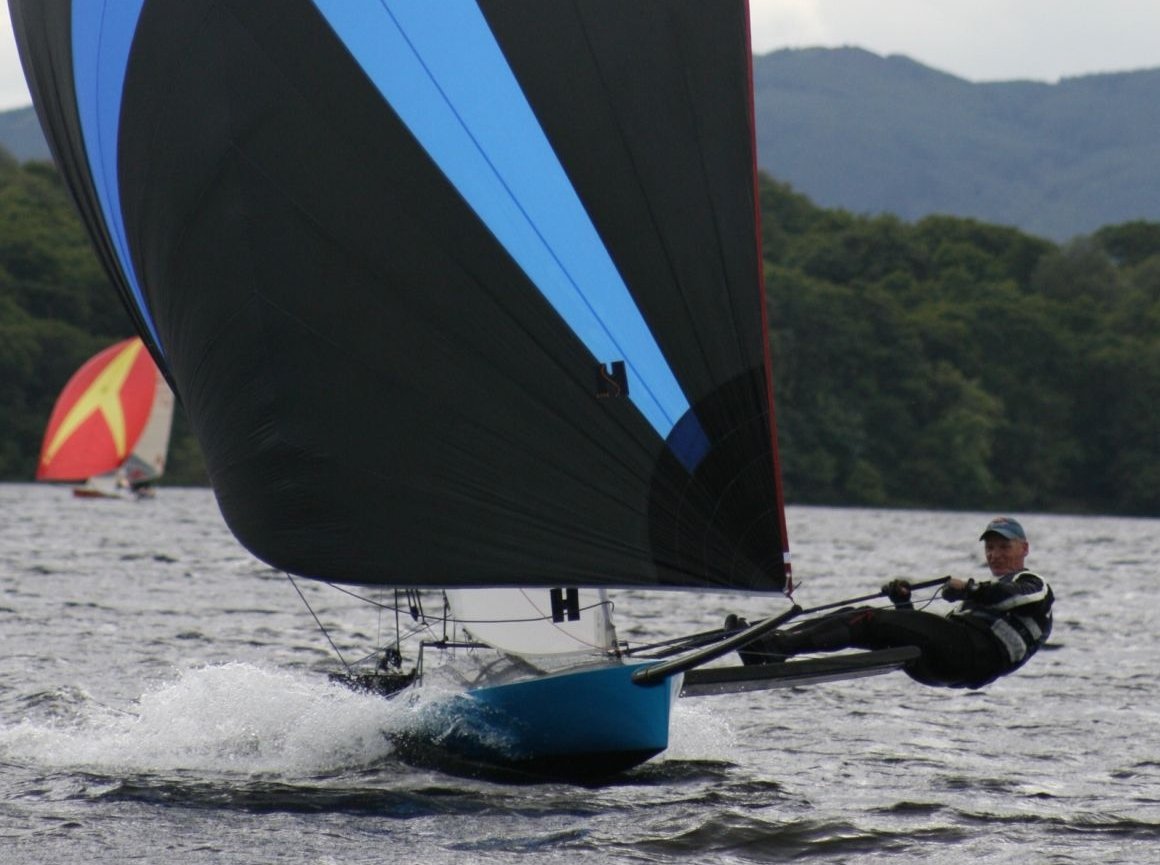
In the late 1990's, the Nethercott design was developed further in the UK with the addition of an asymmetric spinnaker to improve downwind performance. This completely rejuvenated the class at a time when asymmetric sailing and skiffs where starting to become popular.


Driven in the UK by Rob Michael of Razorback Boats, a system was designed for conversion to AC format and was adopted by many of the UK fleet. This format has been highly successful attracting sailors from other singlehanded skiffs into the class and numbers grows steadily with older IC's being converted and new boats being built at a rate of 2-3 per year. The AC has been adopted by some of the German fleet with a small number on Australia and USA. At events the IC and AC fleets are split running from the same start but AC's using a windward leeward course and the IC's reaching to a wing mark over a triangular course. The AC continues to develop but will retain the Nethercot hull design as a more stable platform for the spinnaker. The AC sails off a PY of 873.


New Rules International Canoe

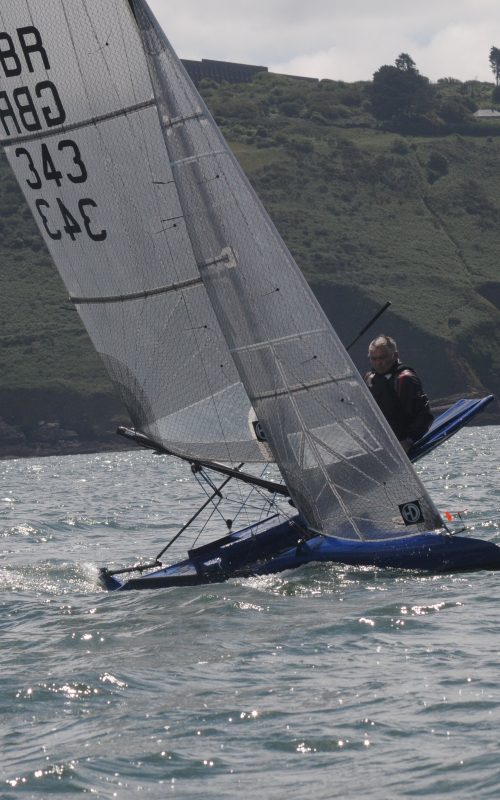
For some, particularly in the USA and Australia, the continuation of the original two sail format was preferred particularly in venues with large waves. With latest materials and design expertise the IC hull design was capable of some improvement to optimise upwind and reaching performance without the use of a spinnaker. 


An international working group proposed that a narrow hull form whould provide a boost in performance. A new set of rules was proposed by Steve Clark in the USA to promote development of the whole hull design based on a set of simple box rules defining only a beam of 750 - 1100mm, a reduced minimum all up weight of 50kg and option for a una rig. These new rules IC's went through several years of trial and development especially in the US and Australia. In the UK these new designs were supported by providing a third fleet at open events or sailing with the one design IC's.

The new rules IC have been developed in the UK by Phil Robin commissioning a design from Phil Morrison, Alistair Warren with his own design and Andy Patterson of Bloodaxe boats with his Teardrop design. Alan Powell is working on a new plywood moulded design and a few other plywood based designs are being imported from the USA for completion 2009.

In 2008, the new rules were adopted as the standard for the IC and all non spinnaker boats are effectively now competing on the same terns on the basis that the IC is now a development class. The old one design Nethercott IC's are still competative and can win against the new rules IC and also offer a low cost entry into the fleet or can be converted to the AC format. The new rule IC has a provisional rateing of 889.